
NEW exhibition | Esther van der Sluis
Now on view at our atelier in Dalfsen and online: Landscapes in paint and porcelain by visual artist Esther van der Sluis. Her work moves between fragility and strength. She explores vulnerability, transience and layered landscapes, each piece feeling like a memory. We'd love to welcome you.
"vulnerability is at the core of my work. Not everything needs to be perfect. The traces of fragility or change give meaning and character"
When: Teusday - Friday | 10 am - 5 pm
Zaterdag op afspraak
Where:
By Mölle linen atelier
De Vesting 26B, Dalfsen
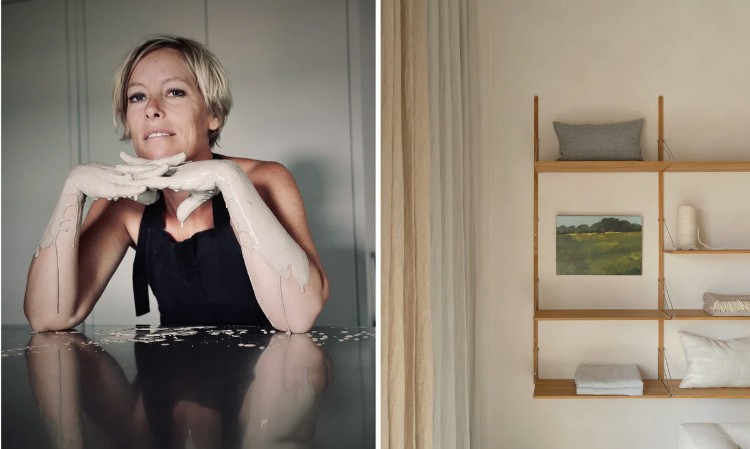
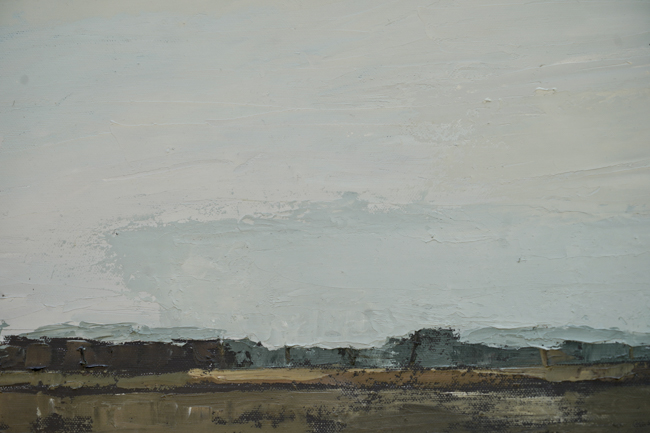
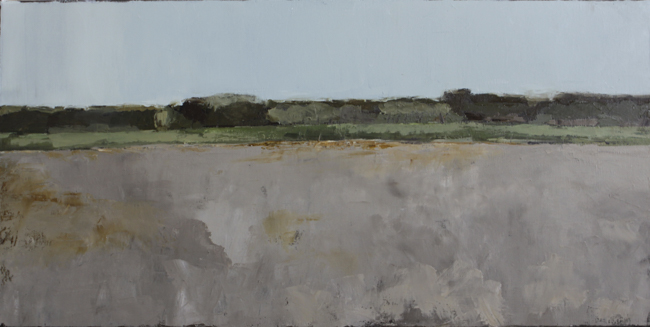
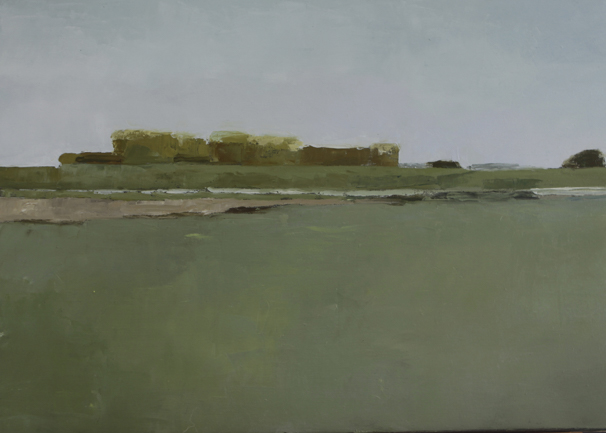
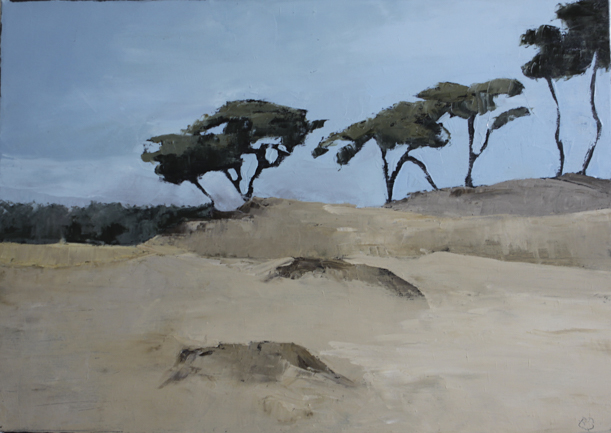
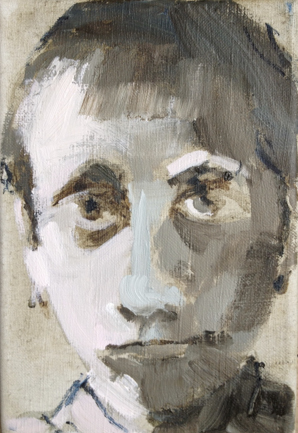
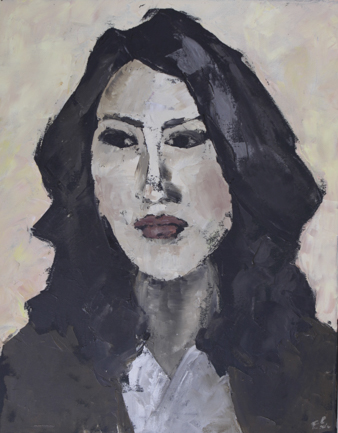
Oil paintings By Esther van der Sluis
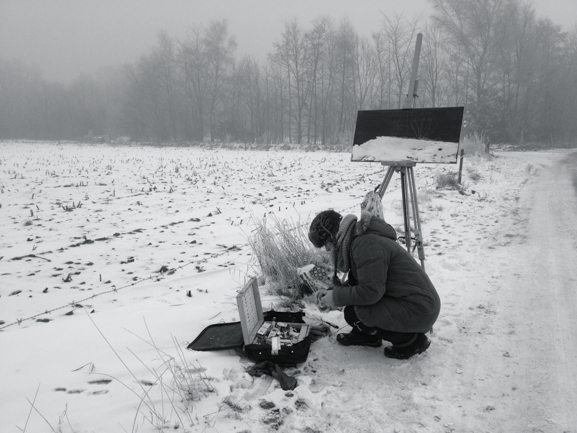
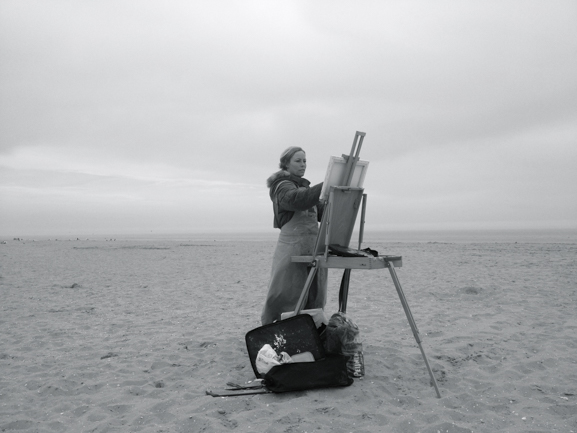
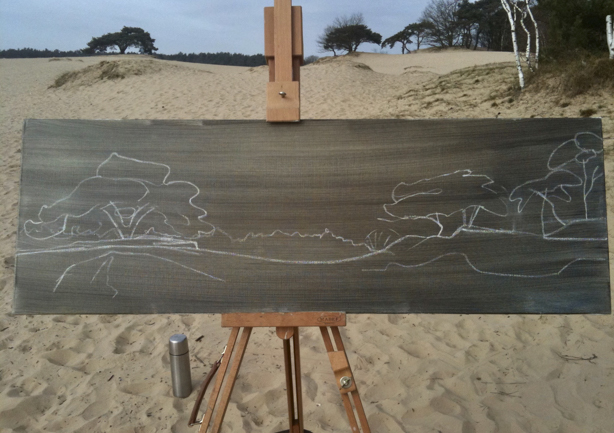
Plei- air schilderen
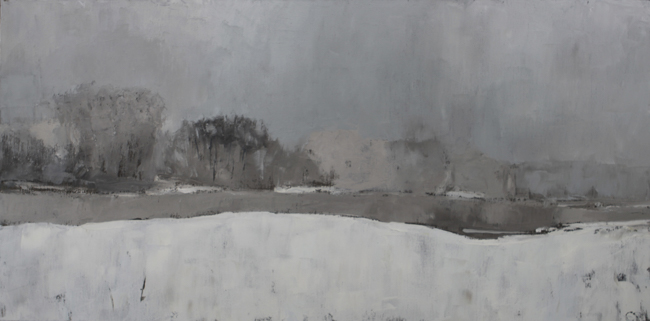
Plein-air schilderen (buiten op locatie) betekent voor mij dat ik de sfeer van het moment probeer te vangen in verf. Wanneer het heeft gesneeuwd en ik ter plekke in een ijskoud winters landschap sta, blootgesteld aan de elementen, levert dat een cruciale bijdrage aan het werk. Het is koud en ik heb het koud. Overal waar ik kijk zie ik de kou; de specifieke kleuren in de ijle lucht, de geluiden zijn verstild, het water is traag. Omdat alle zintuigen een bijdrage leveren aan de vertaling van het beeld in verf, krijgt het werk een ‘ziel’. Iets wat voor mij alleen maar mogelijk is door daadwerkelijk op locatie in die sfeer te kruipen.
soul
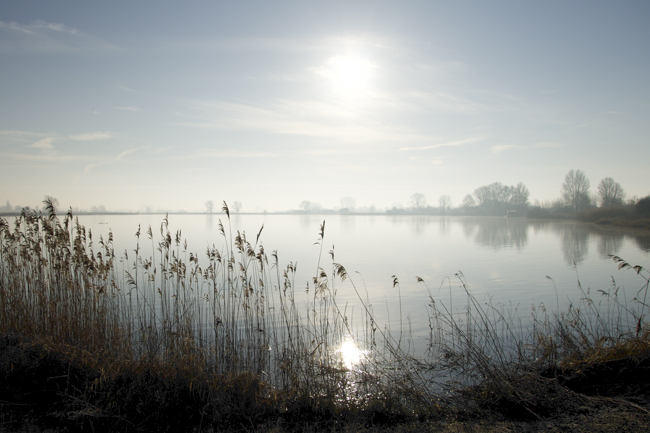
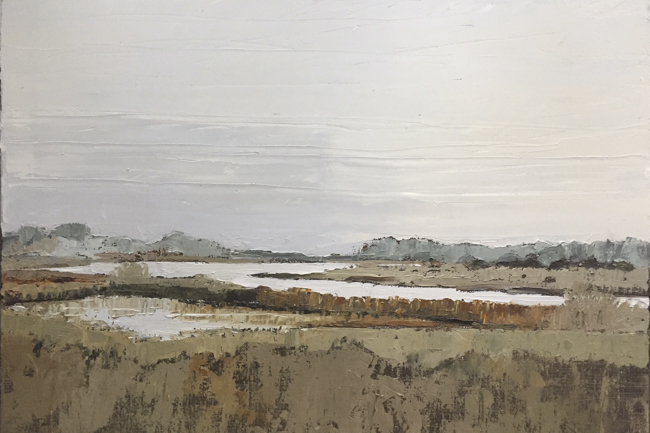
For me, the most important aspect of the visual arts is learning to observe in an exploratory way. In my view, all artistic expressions share this in common. This way of seeing is a slow, unfolding process—one that is cultivated by continually challenging yourself, asking questions about what you are truly perceiving. Am I seeing what I think I see?
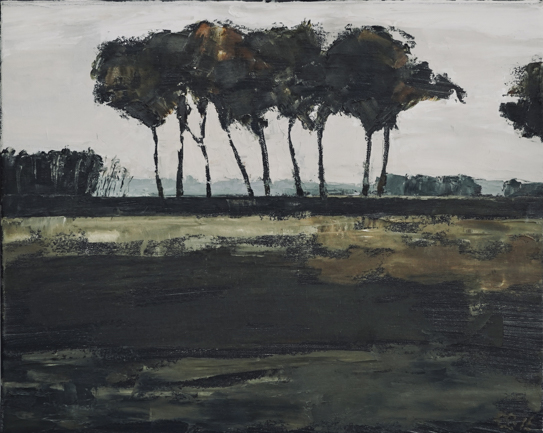
peeling an onion
When I pass a place that sparks my interest for painting, there must always be something that speaks to me at first glance—a direct connection, an instant click. Once I decide to paint that location, I find that more and more details reveal themselves in the landscape as I work. It’s as if you’re peeling an onion, with each layer uncovering a new element as the process unfolds. The season, the quality of light, the weather, and the time of day all play a defining role in the kind of landscape I choose to explore.
'You are, as it were, peeling an onion and each peel is a new element that you discover during the process.'
kleurenpalet
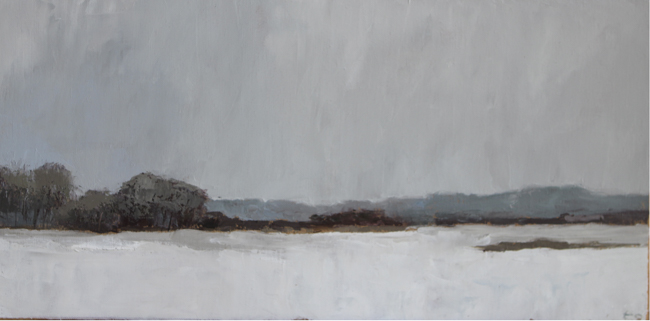
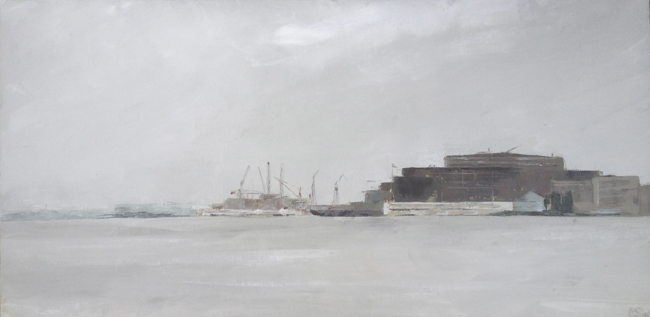
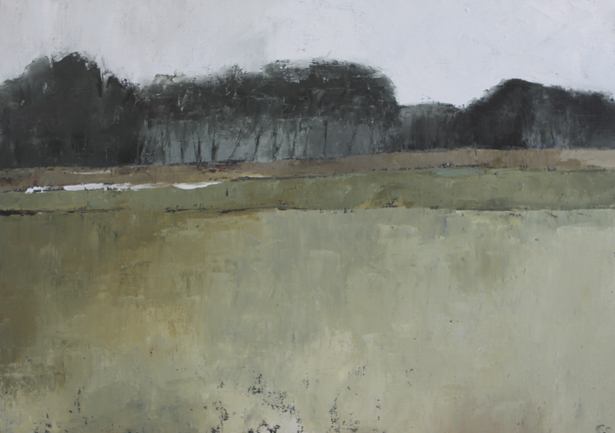
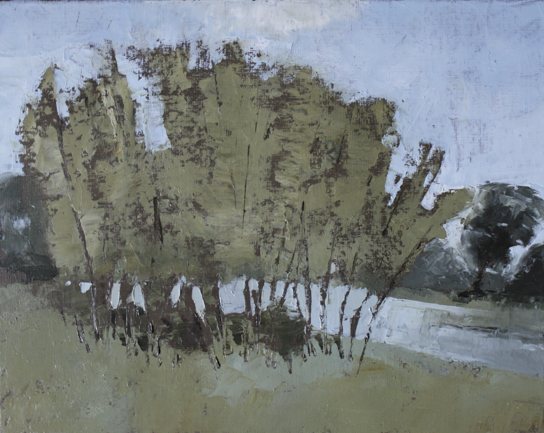
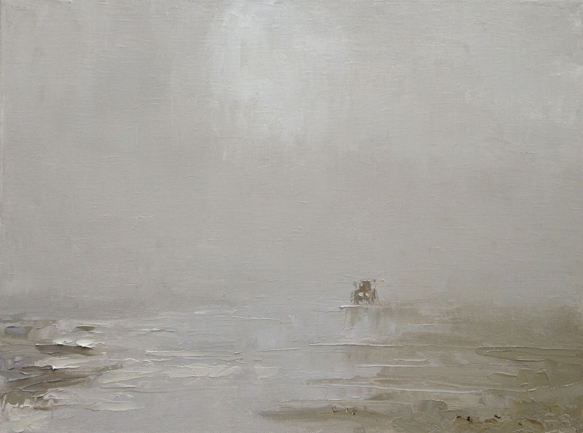
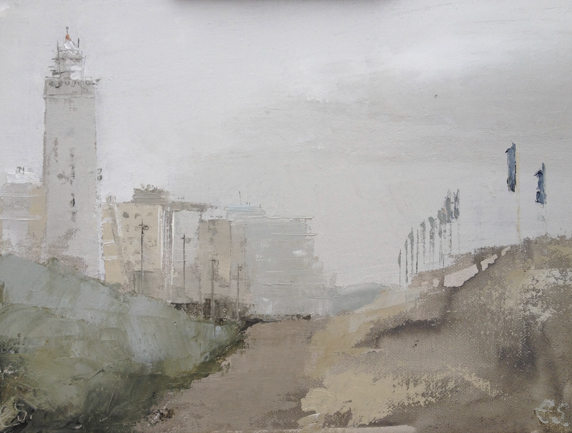
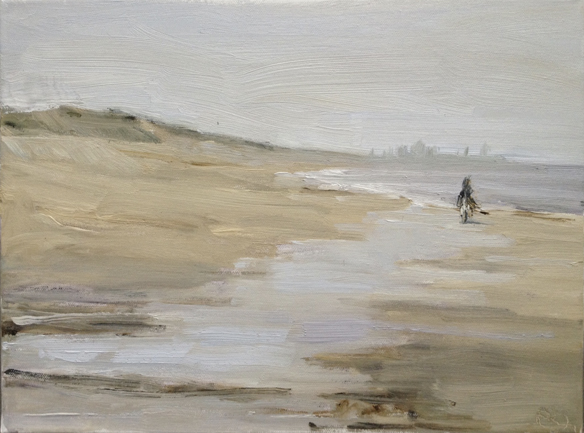
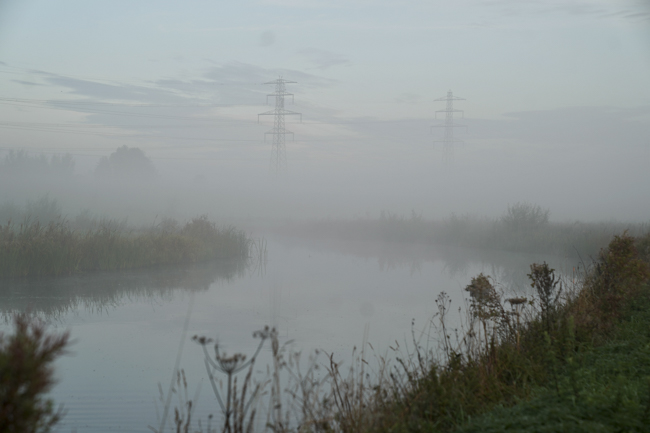
Ik heb een voorkeur voor een schraal kleurenpalet. Dat brengt met zich mee dat ik vooral word gegrepen door kleine kleurverschillen in op het oog monotone landschappen en structuren van bomen en kale vlaktes. Juist wanneer er ogenschijnlijk niets gebeurt, wordt het landschap voor mij interessant; een vaag doorkomende zon, een doorkijk tussen boompartijen of mistige uiterwaarden. Dit vertaalt zich in kleuren die zich vermengen, de ondertoon van het werk komt terug in de rest van het kleurenpalet.
palette knife
In mijn landschappen werk ik voornamelijk met paletmes. Er ontstaan ruggetjes van verf door de aanzet van het paletmes. En geeft het werk een zekere stoerheid. In combinatie met het subtiele kleurpalet is dit enigszins paradoxaal; de subtiele kleurstelling die aangebracht is met het grove gereedschap van een stukadoor.
‘ "In combination with the subtle color palette, this is somewhat paradoxical; the delicate hues applied with the coarse tools of a plasterer."’
senses
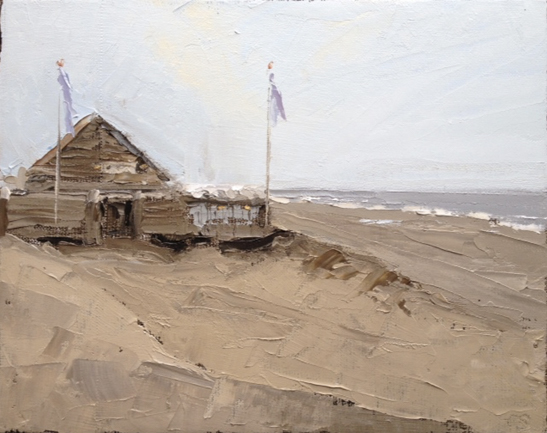
All the senses contribute to translating the image into paint on the canvas. Even the scent of the pine forest on a blazing hot summer's day on the sand dunes in 't Harde is part of this experience. The full sensation of being there is an essential element in translating the atmosphere into paint. Alla Prima techniek* This technique suits my way of working best because the process unfolds within a short time frame.
Limitations of painting - en plein air
Plein-air schilderen kent nogal wat beperkingen. De situatie is veranderlijk vanaf het moment dat je de ezel opzet; de stand van de zon, plotselinge regenbuien, optrekkende ochtendnevel etc. Daardoor is de tijd beperkt en moet je snel werken.
En plein air | painting art
In the mid-19th century, a combination of technological innovation and new philosophical insights into the landscape led artists to step outside to paint, into the open air, en plein air. New ideas about the role of the landscape in painting began to emerge from England around 1800. The overwhelming nature surrounding us was to be depicted in all its facets and moments. Humanity was no longer at the center; instead, the focus shifted to atmosphere—capturing the emotions it evokes, as seen here in the painting by Paul Gabriël, a quintessential plein air painter.
The flying birds indicate the fleeting moment in this tranquil scene on the water. Rapid changes in light and weather conditions required artists to work quickly. Painting became more spontaneous, allowing them to capture the effect of the moment on the canvas. The Impressionists brought this art form to extraordinary heights.
By the end of the 19th century, plein air painting began to lose its prominence. The search for new insights and inspiration drove the artist back into the studio.
Carol Boender, Kunstgalerij Albright
Alla Prima technique
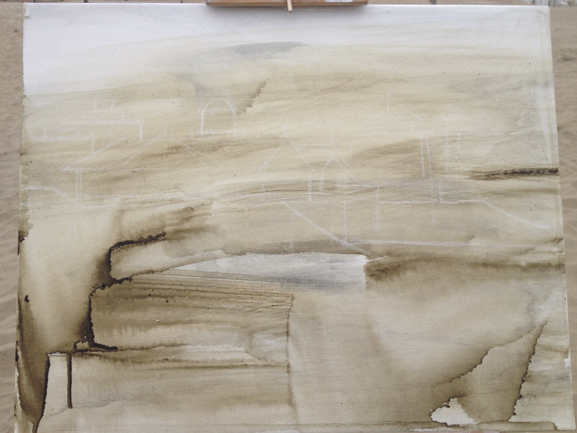
Alla prima, or wet-on-wet painting, requires great skill in handling tools and paint mediums. When executed well, it results in an impressive combination of completion, cohesion, and refinement achieved in a short time with minimal planning. Intuition and experience hold greater importance than precision and forethought. The artist works directly, intuitively, and improvises often. An alla prima painting typically consists of a single, usually opaque, continuous layer of paint. Glazing or other effect layers are generally not heavily employed, although such techniques may become visible in the completed works of many alla prima masters. Parts of the underpainting often remain uncovered or are partially visible through the painted areas. Sketches are rarely used; instead, minimal underpainting or compositional base layers may be applied. The opaque colors are mixed both on the palette and directly on the canvas, emerging spontaneously from intuition and observation.
Jeffrey Carr , Pennsylavania Academy of the Fine Arts 30-11-2007
Make an Appointment
.
Would you like to plan a visit to the studio or a brainstorming session? Please feel free to get in touch with me.